
Sustainability
Environmental Best Practice (EBP)
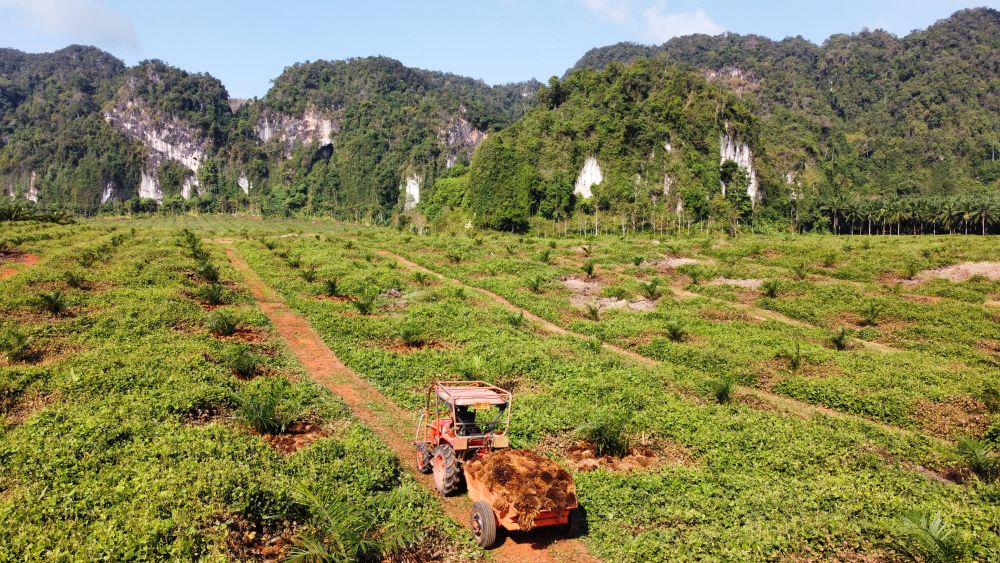
There is no clearing of forests to plant oil palm in Thailand. Most oil palm is grown by small farmers owning less than 8 hectares (50 rai), accounting for more than 90% of the planted area.
Any expansion in planted areas is through agricultural land-use conversion from other crops, such as rubber to oil palm.
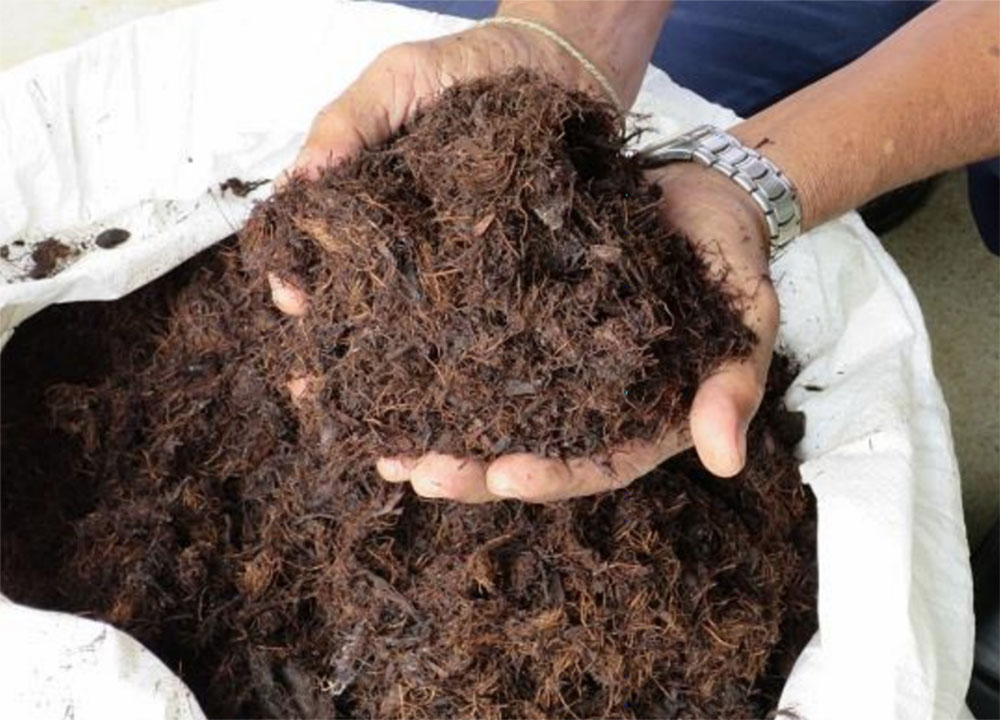
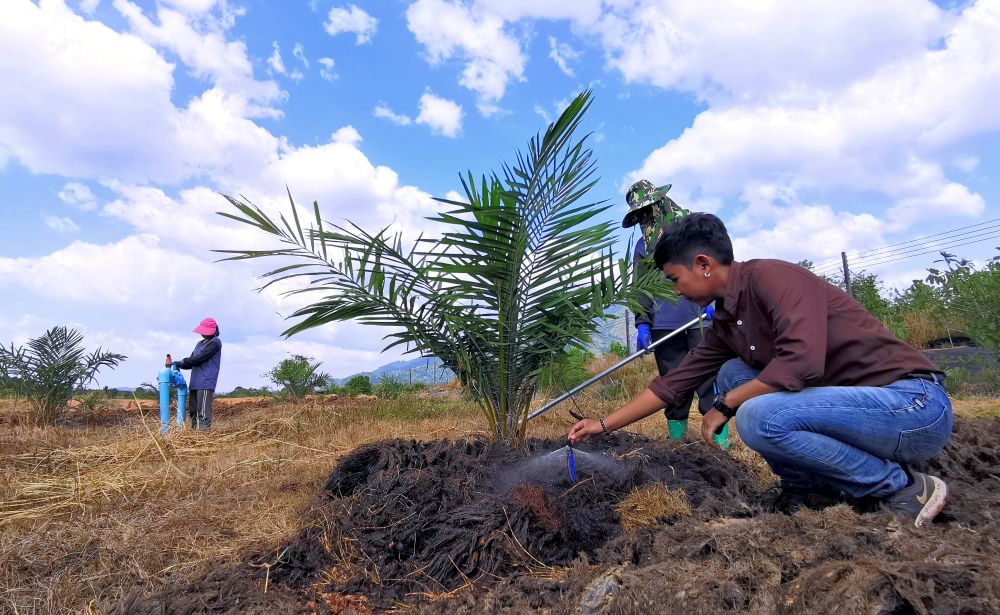
Our plantation estates make full use of factory by-products, such as empty fruit bunches and palm oil mill effluent (POME) sludge as organic fertiliser to substitute inorganic fertiliser and maintain high soil organic matter.
Estate and Field Practices
- Empty fruit bunches are composted to provide an organic growing medium for nursery seedlings and support early, uniform growth.
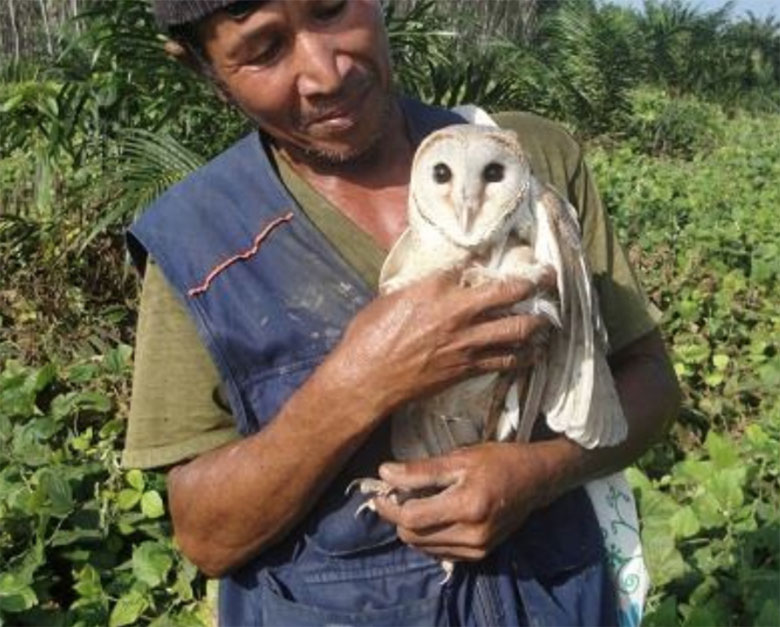
- Biological control is used to protect palms from rat damage by introducing barn owls instead of toxic chemical baiting.
- Pheromone traps are used to control rhinoceros beetle pressure in young palm areas prone to beetle attack.
- Cover crops are planted in replant areas to suppress weeds, fix nitrogen, and reduce soil erosion.
- Target herbicide spraying is limited around palm bases while vegetation is retained on harvesting paths and managed with rotaslashers.
Waste Water Treatment and GHG Reduction
Our factories are equipped with wastewater treatment systems. Palm oil mill effluent (POME) has high biological oxygen demand (BOD), so it is treated through anaerobic and aerobic digestion before water recycling.
Methane digesters capture gas that can be used in engines to generate sustainable electricity for operations and the local grid. This methane capture significantly reduces greenhouse gas emissions.
Need more information?
Univanich Palm Oil PCL has been a pioneer of the oil palm industry in Thailand since the company's first plantations were established back in 1969. Today, Univanich is Thailand's leading producer of crude palm oils and high quality oil palm seeds.
Contact Us